UNITED NATIONS (Reuters) – The United Nations is outlining a plan to help Iraq end its dispute with neighboring Kuwait over war reparations, 19 years after Baghdad invaded the oil-producing Gulf state, a U.N. official said on Monday.
Baghdad wants the U.N. Security Council to reduce its reparation payments to Kuwait, which it ordered Iraq to pay after the 1991 Gulf war ended Iraqi leader Saddam Hussein's 1990-1991 occupation of Kuwait.
Iraq says the reparations -- more than $20 billion -- are unfair and wants the amount reduced so it has more money for reconstruction and development. It has called for annulling Security Council decisions requiring the payments under Chapter 7 of the U.N. charter.
U.N. special envoy to Iraq Ad Melkert told a meeting of the 15-nation council on Iraq that a top priority was the "normalization of (Iraq's) regional relations, not least with Kuwait, and the related exit from Chapter 7 provisions."
Melkert said the U.N. mission in Iraq would outline a plan for achieving this.
"We will seek consent of both parties to define a mutually agreed agenda, the completion of which should resolve any remaining issues and should normalize Iraq's position within the U.N.," he said.
Kuwait opposes ending Iraq's Chapter 7 status. But council diplomats say they might vote to lift the restrictions in the coming months, paving the way for Iraq to renegotiate the amount of reparations it pays to Kuwait.
OTHER ISSUES
Melkert told reporters that the proposal would cover an array of disputes between Kuwait and Iraq.
In addition to reparations, there is the issue of agreeing on the precise land and sea borders between Iraq and Kuwait, he said. Kuwait also demands information related to its missing citizens and the return of property the Kuwaiti government says was stolen during the occupation.
At the end of July Iraq owed some $25.5 billion in reparations, $24 billion to Kuwait alone.
Melkert did not comment on a visit to Iraq this month by U.N. assistant secretary-general Oscar Fernandez-Taranco in response to Baghdad's request for a U.N. inquiry into support given by foreign countries to insurgents.
Iraq's U.N. ambassador, Hamid al-Bayati, said his government considered Fernandez-Taranco's visit as a "first step to be followed by subsequent steps ... to uncover those behind the deadly bombings in Baghdad in August and October."
Twin suicide blasts against government buildings in Baghdad last month killed more than 150 people, and bombings in August devastated the Foreign and Finance ministries.
Iraq blames both attacks on al Qaeda and supporters of Saddam Hussein's outlawed Baath party.
Baghdad has accused neighboring Syria of providing a safe haven for Baathists plotting attacks. The United States has previously accused Iran of interfering in Iraq and providing support to insurgents. Both governments deny the allegations.
Monday, November 16, 2009


Gadhafi hosts Italian women, tries to convert them

ROME – Libyan leader Moammar Gadhafi hosted a soiree in Rome for some 200 young Italian women, but instead of the party they expected the women were given a lecture on Islam and copies of the Quran, a news report said Monday.
At least they got paid.
A reporter for Italy's ANSA news agency went undercover with the women, who were hired for euro50 ($75) by a modeling agency for the event Sunday evening. Journalist Paola Lo Mele said the women assembled at a hotel, where some where left behind because they were not tall enough or dressed modestly enough.
Those accepted were taken to a villa, where Gadhafi lectured them on women's rights and religion, and urged them to convert to Islam.
"All the girls expected a party with a gala dinner," Lo Mele told her agency. Instead, "he made a 45-minute speech on Islam and women's role in Islam. It was a bit of an indoctrination session."
Lo Mele took pictures before and after the event, showing the women carrying Qurans they received as gifts. A second soiree was planned for Monday evening, ANSA said.
Gadhafi was in Rome to attend a U.N. summit on world hunger.
After his speech, Gadhafi made an impromptu visit to one of downtown Rome's swankiest piazzas, stopping traffic as he sat down at an outdoor cafe for something to drink.
Palestinians seek EU support for independence

RAMALLAH, West Bank – The Palestinians asked the European Union on Monday to back their plan to have the U.N. Security Council recognize an independent Palestinian state without Israeli consent.
The idea of seeking U.N. intervention has been gaining steam in the Arab world as the impasse in peacemaking drags on. The Palestinians seek a state in the West Bank, Gaza Strip and east Jerusalem, territories Israel captured in 1967.
"We will seek the support of all members of the international community," Saeb Erekat, a top adviser to Palestinian President Mahmoud Abbas, told reporters in Ramallah. Besides the EU, they also plan to seek U.S. approval, Erekat said.
The plan appears to be largely symbolic, given that the U.S., Israel's chief ally, would likely veto such an initiative at the United Nations. It also would not remove the 500,000 Israelis living in West Bank settlements and east Jerusalem neighborhoods.
The move, however, reflects growing Palestinian frustration with the deadlock in peace efforts. Palestinian officials say they hope international endorsement would force Israel to recognize a future Palestine's borders based on the pre-1967 lines.
Israeli Prime Minister Benjamin Netanyahu has threatened to nullify past accords with the Palestinians if they take any unilateral action. Several Cabinet allies threatened Monday that Israel would annex West Bank settlement blocs if the Palestinians take any one-side action.
"Any unilateral movement will be countered by a unilateral move on our part," Foreign Minister Avigdor Lieberman said Monday. "We cannot conduct policy or negotiations unilaterally; it runs counter to all previous agreements and that's how we will treat it."
In Washington, State Department spokesman Ian Kelly withheld support for the Palestinian initiative. "We support the creation of a Palestinian state that is contiguous and viable," he said. Washington recognizes Palestinian frustration, "but we think that the best way to achieve that is through negotiations by the two parties," he said.
Environment Minister Gilad Erdan, a member of Netanyahu's Likud Party, said Israel should consider annexing West Bank settlements if the Palestinians push forward.
Israel pulled its soldiers and settlers out of Gaza in 2005, but has annexed east Jerusalem and maintains a military occupation in the West Bank. Islamic Hamas militants violently wrested control of Gaza from Abbas loyalists in a 2007, complicating his ability to negotiate.
The U.S., which champions a negotiated solution to the Israeli-Palestinian conflict, has not reacted to the latest Palestinian initiative. But as a key mediator, it would likely veto any such resolution if it reached the Security Council.
The proposal, which has Arab League backing, appears to be an indirect appeal to the international community to shore up Abbas as he tries to win more favorable terms for renewing long-stalled negotiations.
EU foreign ministers will discuss the Arab-backed proposal at their regularly scheduled meeting on Tuesday, said Petra Dachtler, an adviser to the EU's special Middle East envoy, Marc Otte. Because the idea has only been floated recently, the EU has yet to formulate an opinion, she said.
The EU is not on the Security Council, but EU members France and Britain are permanent council members that wield veto power.
The Palestinians have given no timeline for presenting a formal proposal to the Security Council. But with the backing of the Arab League, they have been lobbying U.N. member states to support such a proposal when it is submitted.
Peace talks faltered nearly a year ago after Israel launched its devastating war against Gaza militants, who had bombarded southern Israel with thousands of rockets for years.
The Palestinians say they won't go back to the negotiating table until Israel agrees to halt all construction in settlements built on lands the Palestinians claim for their hoped-for state. Israel promised to do just that under a 2003 peace blueprint, but has never carried out that promise.
Netanyahu, who refuses to halt settlement construction, has repeatedly urged the Palestinians to return to the negotiating table without conditions. The Palestinians are disappointed that the U.S. has failed to coerce Israel to halt the construction, which the Palestinians say threatens their dream of independence by gobbling up the land they claim.
Earlier this month, a frustrated Abbas threatened to quit politics after January presidential elections. But last week, election officials postponed the vote indefinitely, allowing Abbas to remain in office.
Abbas is finding it increasingly difficult to justify negotiations to his people, who have seen talks break down repeatedly over the past 18 years. Hamas is sticking by its conviction that only armed struggle will win the Palestinians a state.
In Gaza, Hamas spokesman Fawzi Barhoum said Abbas' decision to reach out to the Security Council was a sign of desperation. "It's clear that this was a reaction by the Palestinian Authority after running out of options after two decades of negotiations," he said.
Sunday, November 15, 2009
Zardari threatens: I will deal with Lawyers

President Zardari has categorically said “You will see how I deal with the lawyers,” in a way threatening the lawyers long march due to hit Islamabad on March 9th. This comes from a democratically elected president who dishonored several written agreements regarding the restoration of entire deposed judiciary and even used the lawyers movement to uproot Musharraf is now ready to deal with the lawyers on a different playing field.
On the other hand the Prime Minister has said that the Long March is the right of Lawyers and he will try to facilitate their Long March in Islamabad. It does go to show a high level of miscommunication within the ruling elite, a constitutionally ceremonious President giving orders to a democratically elected Prime Minister, who should have been a shoo over when initially appointed in 2008
The month of March is critical for this government as a show down is definitely on the cards, the upcoming senate elections holds the key combined with the Lawyers upsurge to push for their broken promises, all these and more events can really twist the fate of a certain widowed husband and his cronies, the question is, will he fall into the elaborate trap that is being carefully planned from the drawing rooms of Raiwand all the way to London. PML-N with PML-Q is lobbying to get control of the Upper House, which might set into motion some floor crossing within the Lower House, I must agree there is a lot of speculations, but for now lets assume the first check has been served to Mr. Zardari, more are likely to come
Army says morale is down in Afghanistan

WASHINGTON – Morale has fallen among soldiers in Afghanistan, where troops are seeing record violence in the 8-year-old war, while those in Iraq show much improved mental health amid much lower violence, the Army said Friday.
It was the first time since 2004 that soldier suicides in Iraq did not increase. Self-inflicted deaths in Afghanistan were on track to go up this year.
Though findings of two new battlefield surveys are similar in several ways to the last ones taken in 2007, they come at a time of intense scrutiny on Afghanistan as President Barack Obama struggles to craft a new war strategy and planned troop buildup. There is also new focus on the mental health of the force since a shooting rampage at Fort Hood last week in which an Army psychiatrist is charged.
Both surveys showed that soldiers on their third or fourth tours of duty had lower morale and more mental health problems than those with fewer deployments. And an increasing number of troops are having problems with their marriages.
The new survey on Afghanistan found instances of depression, anxiety and post-traumatic stress at about the same as they were in 2007 but double 2005's cases. That was 21.4 percent in 2009, 23.4 percent in 2007 and 10.4 percent in 2005.
That compares to a lower 13.3 percent in Iraq, down from 18.8 percent in 2007 and 22 percent in 2006. (Surveys have been done every year in Iraq, but were only done during three years in Afghanistan.)
The Afghan report also found a shortage of mental health workers to help soldiers who needed it, partly because of the buildup Obama started this year with the dispatch of more than 20,000 extra troops.
Efforts to get more health workers to Afghanistan were made a little harder by last week's shooting. The psychiatrist charged with 13 counts of premeditated murder was slated to go to Afghanistan. Some of the dead and wounded also were to have deployed there to bolster psychological services for soldiers.
Still, officials told a Pentagon press conference that they expect to meet their goal next month of having one mental health worker for every 700 troops — workers that include psychiatrists, social workers, psychiatric nurses and so on. There were 43 in Afghanistan at the time of the survey, while 103 were deemed needed; and since the survey, there has been what Army Surgeon General Lt. Gen. Eric B. Schoomaker on Friday called an aggressive push to send the rest.
The new Afghanistan survey found that individual soldier morale was about the same as previous studies, but that unit morale rates were significantly lower.
For instance, when asked about their own morale, 17.6 percent rated it high or very high, down from 23 percent in 2005. When asked about their unit, only 5.7 percent gave the two highest ratings, a decrease from 10.2 percent in 2007 and 10.5 percent in 2005.
The findings come from surveys and interviews with troops and mental health workers at the wars.
In Iraq, some 2,400 soldiers in randomly selected platoons filled out surveys from December 2008 through March 2009, and a mental health assessment team went to the warfront for a month starting in late February to analyze the results and hold interviews and focus groups. In Afghanistan, more than 1,500 troops in more than 50 platoons filled out the surveys from April to June, and the assessment team went through the same process from May through June.
It's the sixth such survey, a program that was groundbreaking when started in 2003 in that it was the biggest effort ever made to measure the health of troops — and the services they receive — right at the warfront in the middle of a military campaign.
The survey was different from previous ones in that it sampled two types of platoons. Some were maneuver units that war-fighting groups engaged in combat-related tasks and others were support units such as aviation, engineering and medical elements less likely to have as much direct exposure to violence.
Other findings of the Afghanistan survey included:
_Junior enlisted soldiers reported significantly more marital problems than noncommissioned officers, stating they intended to get a divorce or that they suspected their spouses back home of infidelity.
_Exposure to combat, long recognized as a strong factor in mental health problems, was significantly higher this year than rates in 2005 and similar to rates in 2007 for the combat units.
_Combat units reported significantly lower unit morale in the last six months of their tours of duty, more evidence of the wearing affect of long deployments.
_Troops in their third or fourth deployment reported significantly more acute stress and other psychological problems, and among those married, reported significantly more marital problems compared to soldiers on their first or second deployment.
_Troops who spent up to four hours daily playing video games or surfing the Internet as a way to cope helped lower their psychological problems, but spending time beyond that had the opposite effect. Those who exercised or did other physical training decreased their mental problems, regardless of the time spent.
_Troops reported more and better training in suicide prevention and other mental health programs that the Army has been increasing over recent years in an unprecedented effort to focus on the force's mental health.
"Soldiers in Iraq and Afghanistan continue to face stress from multiple deployments into combat but report being more prepared for the stresses of deployments," Schoomaker said.
In first visit to China, Obama walks a tightrope

SHANGHAI – President Barack Obama is walking a tightrope on his first trip to China, seeking to enlist help in tackling urgent global problems while weighing when and how — or if — he should raise traditional human rights concerns.
Obama arrived in Shanghai late at night, in a driving rain, hustling through a phalanx of umbrella-holding dignitaries to reach his limousine. On Monday, the president is holding talks with local politicians and, in one of the marquee events of his weeklong Asian trip, conducting an American-style town hall discussion with Chinese university students.
Thirty years after the start of diplomatic relations between the two countries, the ties are growing — but remain mixed on virtually every front.
The two nations are partnering more than ever on battling global warming, but they still differ deeply over hard targets for reductions in the greenhouse-gas emissions that cause it. China has supported sterner sanctions to halt North Korea's nuclear weapons program, but it still balks at getting more aggressive about reining in Iran's uranium enrichment.
China is a huge and lucrative market for American goods and services, and yet it has a giant trade deficit with the U.S. that, like a raft of other economic issues, is a bone of contention between the two governments. The two militaries have increased their contacts, but clashes still happen and the U.S. remains worried about a dramatic buildup in what is already the largest standing army in the world.
Amid all that, Obama has adopted a pragmatic approach that stresses the positive, sometimes earning him criticism for being too soft on Beijing, particularly in the area of human rights abuses and what the U.S. regards as an undervalued Chinese currency that disadvantages U.S. products.
Obama recognizes that a rising China, as the world's third-largest economy on the way to becoming the second and the largest foreign holder of U.S. debt, has shifted the dynamic more toward one of equals. For instance, Chinese questions about how Washington spending policies will affect the already soaring U.S. deficit and the safety of Chinese investments now must be answered by Washington.
Second, Obama wants not to anger Beijing, but to encourage it to pair its growing economic and political clout with greater leadership in solving some of the most urgent global problems, including a sagging economy, warming planet and the spread of dangerous weapons.
Obama has talked warmly toward China, particularly in the days leading up to his visit.
"The United States does not seek to contain China," Obama said in a speech from Tokyo on Saturday. "On the contrary, the rise of a strong, prosperous China can be a source of strength for the community of nations."
One test of the line Obama is walking on China will be human rights, including religious freedom in the officially atheist nation. Aides said in advance that Obama would raise several human rights issues privately with Chinese leaders, including President Hu Jintao.
But it was unlikely he would repeat those messages too stridently in public, out of concern for angering his hosts. Even before arriving in China, for example, he declined to get specific about human rights concerns with China in his Tokyo speech and eschewed the traditional presidential meeting with the Dalai Lama while he was in Washington in June.
Obama said he would see the exiled Tibetan spiritual leader later, a decision welcomed by Chinese officials who pressure foreign governments not to meet with the Dalai Lama and spurn Tibetans' desires for autonomy from Chinese rule.
The White House hoped Monday's town hall meeting with Chinese university students would allow Obama to telegraph U.S. values — through its successes and failures — to the widest Chinese audience possible.
But those hopes will have their limits in communist-ruled, tightly controlled China. The particulars of the town hall, including whether it could even be called one, were the subject of delicate negotiations between the White House and the Chinese up to the last minute. It remained unclear, for instance, whether — and how broadly — it would be broadcast on television and how much of a hand the central government had in choosing those allowed to question the U.S. president.
Obama deputy national security adviser Ben Rhodes said Obama would call at random on several of those in the audience, to be made up of hundreds of students hand-picked by the department heads of Shanghai-area universities, and would also answer questions solicited in advance by the White House from "various sources on the Internet."
Even if the event is only aired on China's main English-language TV channel, which has very few viewers, the White House will stream the conversation live on http://www.whitehouse.gov, an unblocked site in China.
From Shanghai, Obama was to be off to the capital of Beijing for the pomp and substance of a two-day state visit hosted for Obama by Hu.
Obama's China visit features the only sightseeing of his high-intensity Asian journey. He will visit the Forbidden City, home of former emperors in Beijing, and the centuries-old Great Wall outside of the city. Visiting a country's noted landmarks is considered a sign of respect in the world of diplomacy. But Obama aides also have learned that finding some tourist time serves to both calm and energize their boss amid the always grueling schedule of a foreign trip.
Saturday, November 14, 2009
Punjab’s governor says democracy being strengthened in Pakistan

LAHORE — Only a democratic government can improve the national economy and ensure the security of the country, said Punjab Governor Salman Taseer on Nov. 9.
“Uniting the nation on one platform against terrorism is the achievement of a democratic government,” he said. “Whether it is national security or solutions to economic problems, only a democratic system can cope with these issues effectively. It is a good sign that democracy is gradually being strengthened in Pakistan and all institutions are working freely.”
Taseer said the relationship between democracy and wealth may suggest that democracy naturally leads to prosperity. According to theoretical and empirical analyses, democracy affects long-term growth and promotes good governance in a country by allowing voters peacefully and regularly to oust inept, inefficient and corrupt administrations. More efficient, successful leaders improve the quality of governance in the long term. Experts feel that political stability generates business confidence, which leads to investment, job growth and increased productivity to meet demand, all of which generates economic growth.
The governor said the entire world supports democratic development in Pakistan, particularly the international 'Friends of Pakistan’ who are offering financial assistance to strengthen the democratic system in the country.
“Pakistan is passing through a very critical phase, and…the government will make every effort to improve the country’s economy,” Taseer said.
He also said the government is committed to providing all possible support to the trade community to increase Pakistan’s export earnings. “Various measures taken by the present government to support the country’s economy are fruitful. Foreign remittances have increased significantly and the nation’s foreign exchange reserves have risen to US$14 billion, up from just $6 billion several years ago.”
Nawaz seeks probe into subs kickbacks

LAHORE: Pakistan Muslim League-N Quaid Nawaz Sharif has demanded of the government to probe the allegations of $49.5 million commission in the purchase of French submarines during the PPP government in 1994, and bring to light the names of those political, civil and military officials who misappropriated the hard-earned money of people. He also demanded strict action against the culprits.
He was addressing a gathering of PML-N leaders and workers from Faisalabad at his Raiwind residence here on Friday. The meeting was attended by Chaudhry Sher Ali and Rana Sana Ullah, Punjab Chief Minister Shahbaz Sharif, Rafiq Tarar and other PML-N parliamentarians.
Nawaz said it was very painful for him that people were suffering because of unemployment, price-hike, poverty, lack of health and education facilities while a handful of people had received kickbacks of Rs 4 billion in just one deal. He said the poor were craving for basic facilities, and the privileged class was plundering the national wealth. He said the national wealth had been plundered on the one hand while the people who committed heinous crimes like abrogating the Constitution and changing loyalties were given guard of honour instead of punishment.
He said the government should honourably complete its five-year tenure. He said the PML-N wanted transfer of power in accordance with the law and Constitution. He claimed the PML-N was showing complete patience just to protect the system and the government should also perform its responsibility of establishing good governance for solidarity of democracy and country.
He also appreciated the sacrifices of people of Faisalabad and stated that people should perform their duties to force the administrative machinery to continue treading on right path.
End.
Six Terrorists Killed, 12 Soldiers Martyred In SWA

RAWALPINDI: Six terrorists have been killed while 12 soldiers embraced shahadat and 2 soldiers injured during the ongoing operation Rah-e-Nijat in South Waziristan.
According to ISPR, security forces successfully secured important feature point 5376, 3 kms north of Ahmed Wam on Jandola – Sararogha Axis.
Exchange of fire took place between security forces and terrorists at Ahmed Wam, resultantly 2 soldiers embraced Shahadat and 2 were injured, while 6 terrorists were killed.
Clearance operation at Khawasai is underway.
Security forces conducted search operation in area around Torwam on Shakai – Kaniguram Axis, cleared compounds, and recovered cache of arms and ammunition.
10 wounded soldiers due to engagement with terrorists of Langar Khel yesterday succumbed to injuries and embraced shahadat. Total casualties are 15 soldiers shaheed.
Security forces have fully secured the area from Makeen to Marobi Raghzai and road block has been established at Shah Wali Algad on Razmak- Makeen Axis.
Security forces cleared built up area of Rogha and Mir Khoni.
Terrorists fired rockets at Razmak Camp and Laghr Manza, which was effectively responded by security forces.
Security forces apprehended wanted terrorist Qamar Ali at Shangla during operation Rah-e-Rast in Swat – Malakand.
Security forces conducted search operation at Shalpin, Amankot, Ghalagai and apprehended 3 terrorists.
Friday, November 13, 2009
FO rejects India statement on Gilgit-Baltistan elections

ISLAMABAD Pakistan has rejected India's statement that elections in Gilgit-Baltistan are a cosmetic exercise.
The Foreign Office spokesman Abdul Basit said India has no locus standi on Gilgit-Baltistan elections.
Earlier, the Indian external ministry spokesperson alleges that elections in Gilgit-Baltistan are just another cosmetic exercise intended to camouflage the fact of Pakistan’s illegal occupation of areas of Jammu and Kashmir
‘NY trial’ for key 9/11 suspects
Alleged 9/11 mastermind Khalid Sheikh Mohammed will be sent from Guantanamo Bay to New York for trial in a civilian court, reports say.
Citing unnamed government officials, the reports said he would be transferred from the US prison camp in Cuba with four other suspects.
US Attorney General Eric Holder is expected to announce the decision in a news conference set for 1600 GMT.
Mr Mohammed has admitted planning the 9/11 attacks, the US military says.
The five men have until now been facing prosecution at US military commissions in Guantanamo. The government had faced a 16 November deadline to decide how to proceed in their cases.
US President Barack Obama has made closing the detention camp a top priority.
Asked about the reports during a visit to Tokyo, he declined to pre-empt Mr Holder’s announcement, but said that Khalid Sheikh Mohammed would face “most exacting demands of justice”.
According to the reports, Mr Holder will also announce that a suspect in the 2000 bombing of the USS Cole in Yemen will be tried at a military tribunal.Khalid Sheikh Mohammed has been described by US investigators as “one of history’s most infamous terrorists”.
They say he has admitted being responsible “from A to Z” for the 9/11 attacks.
Believed to be the number three al-Qaeda leader, he was captured in Pakistan in March 2003.
He told a pre-trial hearing at Guantanamo in December 2008 that he wanted to plead guilty to all charges against him.
But intelligence memos released earlier this year revealed he had been subjected to harsh interrogation techniques including water-boarding on multiple occasions since his capture – potentially rendering some evidence inadmissible.
The other four men – thought to be the two Yemenis, a Saudi and a Pakistani-born Kuwaiti who have shared hearings with him at Guantanamo Bay – are also accused of helping plan and finance the attacks.
The decision to try them in a New York court appears to be part of Mr Obama’s efforts to close Guantanamo by 22 January 2010.
His administration says it will try some detainees in US courts and repatriate or resettle others who are not perceived as a threat.
However, questions remain over the fate of those assessed as dangerous but who for legal reasons could not be prosecuted in a US court – prompting suggestions that the deadline will slip.
And, says the BBC’s Jonathan Beale, some families of those who died in the 9/11 attacks have already voiced strong opposition to any attempt to try their alleged architect in New York.
Citing unnamed government officials, the reports said he would be transferred from the US prison camp in Cuba with four other suspects.
US Attorney General Eric Holder is expected to announce the decision in a news conference set for 1600 GMT.
Mr Mohammed has admitted planning the 9/11 attacks, the US military says.
The five men have until now been facing prosecution at US military commissions in Guantanamo. The government had faced a 16 November deadline to decide how to proceed in their cases.
US President Barack Obama has made closing the detention camp a top priority.
Asked about the reports during a visit to Tokyo, he declined to pre-empt Mr Holder’s announcement, but said that Khalid Sheikh Mohammed would face “most exacting demands of justice”.
According to the reports, Mr Holder will also announce that a suspect in the 2000 bombing of the USS Cole in Yemen will be tried at a military tribunal.Khalid Sheikh Mohammed has been described by US investigators as “one of history’s most infamous terrorists”.
They say he has admitted being responsible “from A to Z” for the 9/11 attacks.
Believed to be the number three al-Qaeda leader, he was captured in Pakistan in March 2003.
He told a pre-trial hearing at Guantanamo in December 2008 that he wanted to plead guilty to all charges against him.
But intelligence memos released earlier this year revealed he had been subjected to harsh interrogation techniques including water-boarding on multiple occasions since his capture – potentially rendering some evidence inadmissible.
The other four men – thought to be the two Yemenis, a Saudi and a Pakistani-born Kuwaiti who have shared hearings with him at Guantanamo Bay – are also accused of helping plan and finance the attacks.
The decision to try them in a New York court appears to be part of Mr Obama’s efforts to close Guantanamo by 22 January 2010.
His administration says it will try some detainees in US courts and repatriate or resettle others who are not perceived as a threat.
However, questions remain over the fate of those assessed as dangerous but who for legal reasons could not be prosecuted in a US court – prompting suggestions that the deadline will slip.
And, says the BBC’s Jonathan Beale, some families of those who died in the 9/11 attacks have already voiced strong opposition to any attempt to try their alleged architect in New York.
British PM wants 5,000 more foreign troops in Afghanistan
LONDON: British Prime Minister Gordon Brown said Friday he was trying to persuade NATO partners in Europe and other allies to commit 5,000 troops to the Afghanistan war.
Brown told British radio he was sending envoys to fellow European countries in a bid to get them to share the burden.
“I’m asking them to help, I think we can probably get another 5,000 forces into Afghanistan from that NATO and outside NATO group, and we’ll be part of that. “I have taken the responsibility of asking others in Europe, and outside Europe actually, if they will back this strategy which is partnering the Afghan forces, mentoring the Afghan forces.
“I believe I can persuade countries who said only a few weeks ago they would send no more troops to Afghanistan, that if we are training the Afghan forces and partnering, and if there is a way forward that allows our troops to come home over time, it’s right for them to contribute troops as well, and so burden-sharing will happen.”
Britain has around 9,000 troops in Afghanistan, largely in the troubled southern Helmand Province where they are battling Taliban insurgents.
Brown told British radio he was sending envoys to fellow European countries in a bid to get them to share the burden.
“I’m asking them to help, I think we can probably get another 5,000 forces into Afghanistan from that NATO and outside NATO group, and we’ll be part of that. “I have taken the responsibility of asking others in Europe, and outside Europe actually, if they will back this strategy which is partnering the Afghan forces, mentoring the Afghan forces.
“I believe I can persuade countries who said only a few weeks ago they would send no more troops to Afghanistan, that if we are training the Afghan forces and partnering, and if there is a way forward that allows our troops to come home over time, it’s right for them to contribute troops as well, and so burden-sharing will happen.”
Britain has around 9,000 troops in Afghanistan, largely in the troubled southern Helmand Province where they are battling Taliban insurgents.
Pakistan – Blast hits Peshawar security HQ
A bomb has hit Pakistan’s intelligence agency in the north-western city of Peshawar, killing at least seven people and injuring 35, officials said.
The blast destroyed much of the three-story building belonging to the Inter-Services Intelligence (ISI) agency and many cars on the street outside.
The area has been frequently targeted by militants in recent weeks.
Separately, at least 10 people were hurt in a bombing at a police station in the town of Bannu, police said.
Attacks in Pakistan have increased as the army continues its offensive against the Taliban in South Waziristan region.
More than 100 people were killed in a blast at a market in Peshawar more than two weeks ago.
Deadly day
The Peshawar blast occurred at around 0630 (0130 GMT), Pakistani media said.
Reuters news agency said the attack was carried out by a suicide car-bomber.any of the wounded were rushed to local hospitals, while security sources said several more could be trapped under the rubble.
Sahib Zada Anis, the head of Peshawar’s local government, said most of the victims were civilians.
Pakistani Prime Minister Yusuf Raza Gilani condemned the attack, saying his country’s resolve to deal with militancy would not be weakened.
The city has been on high alert for weeks. Schools were closed after the attack.
The last time an ISI building was targeted was in May, when 24 people were killed in a suicide attack in the eastern city of Lahore.
The blast at the Bakakhel police station in Bannu – also in Pakistan’s North-West Frontier province – wounded at least 10 people, a local police official told Pakistani media.
Bannu is close to the tribal region of North Waziristan, a Taliban stronghold.
The latest attacks come one day after 17 Pakistani soldiers were killed in fighting in South Waziristan, in the military’s deadliest day since launching a major offensive there in mid October, security officials said.
Analysts have said that ordinary citizens are increasingly being targeted because the militants are cornered and under great pressure from the military.
Despite the mounting death toll, Pakistani Prime Minister Yousuf Raza Gilani said on Wednesday that the government was “fully committed” to completing the Waziristan offensive and “eliminating terrorism completely”.
The blast destroyed much of the three-story building belonging to the Inter-Services Intelligence (ISI) agency and many cars on the street outside.
The area has been frequently targeted by militants in recent weeks.
Separately, at least 10 people were hurt in a bombing at a police station in the town of Bannu, police said.
Attacks in Pakistan have increased as the army continues its offensive against the Taliban in South Waziristan region.
More than 100 people were killed in a blast at a market in Peshawar more than two weeks ago.
Deadly day
The Peshawar blast occurred at around 0630 (0130 GMT), Pakistani media said.
Reuters news agency said the attack was carried out by a suicide car-bomber.any of the wounded were rushed to local hospitals, while security sources said several more could be trapped under the rubble.
Sahib Zada Anis, the head of Peshawar’s local government, said most of the victims were civilians.
Pakistani Prime Minister Yusuf Raza Gilani condemned the attack, saying his country’s resolve to deal with militancy would not be weakened.
The city has been on high alert for weeks. Schools were closed after the attack.
The last time an ISI building was targeted was in May, when 24 people were killed in a suicide attack in the eastern city of Lahore.
The blast at the Bakakhel police station in Bannu – also in Pakistan’s North-West Frontier province – wounded at least 10 people, a local police official told Pakistani media.
Bannu is close to the tribal region of North Waziristan, a Taliban stronghold.
The latest attacks come one day after 17 Pakistani soldiers were killed in fighting in South Waziristan, in the military’s deadliest day since launching a major offensive there in mid October, security officials said.
Analysts have said that ordinary citizens are increasingly being targeted because the militants are cornered and under great pressure from the military.
Despite the mounting death toll, Pakistani Prime Minister Yousuf Raza Gilani said on Wednesday that the government was “fully committed” to completing the Waziristan offensive and “eliminating terrorism completely”.
Thursday, November 12, 2009
Rejuvenated Pakistan beat New Zealand in first T20

DUBAI: Pakistan overcame their one-day international series loss and maintained their world champion status in Twenty20 cricket with a convincing 49-run win over New Zealand at Dubai Stadium on Thursday.
Opener Imran Nazir lifted Pakistan to a competitive 161-8 on a pitch of variable bounce before the bowlers unleashed a tight line and length to dismiss New Zealand for 112 in 18.3 overs.
The victory was Pakistan's 20th in 26 Twenty20 internationals and their third in as many matches against the injury-ravaged Black Caps.
Brendon McCullum, leading the side in the absence of the injured Daniel Vettori, raised hopes by smashing 17 off the first over bowled by Mohammad Aamir.
But Aamir came back strongly by claiming McCullum (19) in his second and Ross Taylor (five) in his third to quash any hopes of an upset. Aamir finished with 2-21.
Abdul Razzaq (2-9) then dismissed Scot Styris (four) and Neil Broom (14) before spinners Shahid Afridi (2-21) and off-spinner Saeed Ajmal (2-18) wrapped up the New Zealand's innings.
The second match will be played here on Friday. Pakistan lost the preceding three-match one-day series 2-1.
Captain Afridi said the win was a much-needed boost for Pakistan.
‘We had to win this match after our one-day loss,’ said Afridi. ‘After getting 161 I thought that with our varied attack, we'd successfully defend the total.’
Earlier, Nazir hit five boundaries and four towering sixes off 38 balls before New Zealand, who put Pakistan into bat, hit back by taking the last six wickets in the space of 69 runs.
Nazir and Kamran Akmal (13) took Pakistan to 34 as Nazir hit two successive sixes off Ian Butler's fifth over.
Nazir added a quickfire 36 with captain Afridi (24), also completing his second Twenty20 half-century off just 34 balls. Paceman Shane Bond had Nazir caught in the outfield in the 12th over to put the brakes on the innings.
Aaron Redmond, bowling occasional leg-breaks for the first time in a limited overs match, dismissed Afridi for 24 and Shoaib Malik (six) to finish with 2-24, before hobbling off with a groin injury.
Abdul Razzaq hit a 15-ball 26 with three boundaries and a six to give Pakistan's innings a final flourish.
New Zealand stand-in captain McCullum said a string of injuries affected the performance.
‘We were struck with injuries,’ said McCullum. ‘But those who came in got the opportunity. We weren't at our best today but we have the potential to turn this around.’
New Zealand started the match without captain Vettori who was ordered to undergo a CT scan after being hit on the grill of his helmet during the second one-day international at Abu Dhabi and began to feel unwell.
McCullum led the team, which was also missing pacemen Kyle Mills (shoulder) and James Franklin (back).—AFP
Wednesday, November 11, 2009
Obama considering 4 options for Afghanistan, sources say
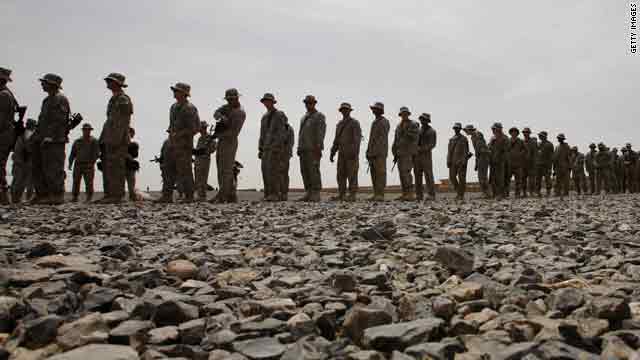
Washington -- President Obama is considering four scenarios to move forward in Afghanistan and is expected to discuss them at his eighth meeting with his war council on Wednesday afternoon, sources told CNN.
Though the options are not being spelled out, one is fairly well-defined.
That option, a senior administration official and U.S. military official independently confirmed, calls for sending about 34,000 U.S. troops to Afghanistan.
A military official said the plan would send three Army brigades, totaling about 15,000 troops; a Marine brigade, about 8,000 troops; a headquarters element, about 7,000 troops; and 4,000 to 5,000 support troops.
The troops would be spread across the country, mainly focusing in the south and southeast, where much of the fighting is.
The military official said the option has been a favorite at the Pentagon in the past few weeks to send to the president.
The combat brigades would be brought in gradually, in three-month intervals.
That is one option, the senior administration official emphasized, saying the president had not decided.
The other options, the official said, would be "different mixes," or "different components of it."
On Wednesday, the president will address a number of issues with his war council, beyond how many troops to send. Obama also is expected to consider the kind of cooperation the United States can expect from the government of Afghan President Hamid Karzai, the kind of civilian support the United States is willing to offer, and the kind of support the United States can expect from other countries, the senior administration official said.
All those factors could lead to "further refinements" or some "greater elements being considered," the official said.
"He's got to fine-tune this, put it all together ... for what direction best advances our interests," the official said.
Despite reports to the contrary, Obama has not decided the number of U.S. troops he will send to Afghanistan, White House officials said.
Such reports are "absolutely false," Press Secretary Robert Gibbs said. And anyone who suggests otherwise, "doesn't have, in all honesty, the slightest idea what they're talking about."
White House officials would not say whether Wednesday's meeting with the war council would be the president's final meeting before deciding on Afghanistan, but they did say he would continue to discuss the war effort in smaller groups, including when he travels to Asia. He leaves Thursday.
AP-GfK Poll: A grouchy public sticking with Obama

WASHINGTON – President Barack Obama still has the public approval of a majority of Americans, but he finds himself governing an increasingly pessimistic country.
This comes at a time when he is trying to revive a struggling economy, weighing more troops for the 8-year-old Afghanistan war, muscling a health care reform overhaul through Congress and hoping to push through other ambitious measures like legislation focused on climate change.
The latest Associated Press-GfK poll shows that Americans grew slightly more dispirited on a range of matters over the past month, continuing the slippage that has occurred since Obama took office.
People were more pessimistic about the direction of the country than in October. They disapproved of Obama's handling of the economy a bit more than before. And, perhaps most striking for the commander in chief, more people have lost confidence in Obama on Iraq and Afghanistan over the last month. Overall, there's a malaise about the state of the nation.
"It's in pretty bad shape," said truck driver Floyd Hacker of Granby, Mo., a Democrat who voted for Obama. "He sounded like somebody who could make things happen. I still think he can."
Still, Hacker said, he questions the president's approach to the economy, what the U.S. is trying to accomplish in Afghanistan and Obama's focus on health care, adding, "He can't handle everything at one time."
Public attitudes like that are troubling for a president trying to accomplish an ambitious agenda at home while fighting wars abroad, as well as for a Democratic Party heading into a critical election year. It will have to stave off losses that a new president typically experiences in his first midterm elections. A third of the Senate, all of the House and most governors' offices will be on the ballot.
The findings underscore just how quickly the political environment can change, a lesson for out-of-power Republicans who are buzzing with energy after booting Democrats from rule in Virginia and New Jersey governors' races last week.
It was just over a year ago that Obama won the White House in an electoral landslide and Democrats padded their congressional majorities. The country was riding high with optimism by just about all measures when Obama took office in January.
Hope and change were in vogue back then. But change didn't happen overnight, as the rhetoric of campaigning crashed headlong into the realities of governing. And hope slipped in a country that always has clung to it.
Now, Obama's approval rating stands at 54 percent, roughly the same as in October but very different from the enthusiastic 74 percent in January just before he took office. And some 56 percent of people say the country is heading in the wrong direction, an uptick from 51 percent last month and 49 percent in Obama's first month as president.
The economy is by far the most important issue on Americans' minds. Unemployment hit 10.2 percent last month even though the administration has promoted glimmers of improvement and many economists say the recession is over.
Those jobless figures help explain why as many people said the economy got worse in the past month as said it got better — and it's not many people who thought it got better, just 22 percent. Most say the economy stayed the same, and just 46 percent approve of how Obama is handling the economy, compared with 50 percent last month.
"He did good on getting Wall Street up and running. But I'm not going," said independent Jay Huffaker, 33, of Knoxville, Tenn., a construction worker who has been unemployed for a year and a half. The country is in terrible shape, he said, adding, "It seems like it's getting worse and worse and worse and worse."
The nation also has grown more lukewarm on Obama and the wars as he tries to wind down the one in Iraq and considers ramping up the one in Afghanistan.
Compared with October, 45 percent of people now disapprove of Obama's handling of Iraq, up from 37 percent; while 48 percent now disapprove of his handling of Afghanistan, up from 41 percent. A majority of Americans oppose both wars. And more than half — 54 percent — now oppose sending more troops to Afghanistan, an increase from 50 percent last month.
"We either need to do something to win the wars, or just come home," said Republican Heather Johannessen, a stay-at-home mom in the suburbs of Minnesota's Twin Cities, who thinks the U.S. is in a holding pattern in both Iraq and Afghanistan.
On health care, about half of the country approves of how Obama is doing on his signature domestic issue — virtually unchanged from October. In a major victory for Obama, the House passed a sweeping overhaul of the U.S. medical system over the weekend. But the fate of the measure is uncertain in the Senate, where moderate Democrats who are necessary for passage are balking at the cost and various provisions.
Only a third of the country approves of how Congress is doing.
The AP-GfK Poll was conducted Nov. 5-9 by GfK Roper Public Affairs and Media. It involved landline and cell phone interviews with 1,006 adults nationwide and has a margin of sampling error of plus or minus 3.1 percentage points.
Military sees increase in wounded in Afghanistan

WASHINGTON – Far from winding down, the numbers of wounded U.S. soldiers coming home have continued to swell. The problem is especially acute among those who fought in Afghanistan, where nearly four times as many troops were injured in October as a year ago.
Amputations, burns, brain injuries and shrapnel wounds proliferate in Afghanistan, due mostly to crude, increasingly potent improvised bombs targeting U.S. forces. Others are hit by snipers' bullets or mortar rounds.
With Veterans Day on Wednesday, wounded veterans from the recent conflicts consider the toll of these injuries, and the rough road ahead for the injured. Of particular concern are the so-called hidden wounds, traumatic brain injuries and post-traumatic stress disorder that can have side effects such as irritability and depression.
Since 2007, more than 70,000 service members have been diagnosed with traumatic brain injury — more than 20,000 of them this year, according to the Defense and Veterans Brain Injury Center. Most of the injuries are mild but leave symptoms such as headaches and difficulty concentrating.
Vince Short, 42, a former Army specialist who suffered brain injuries in a 2003 roadside bomb attack in Iraq, said he can't help but feel for the soldiers coming home from Afghanistan with similar wounds.
"I cry out for them. It's tough. It's hard to put it in words," Short, who served with the District of Columbia Army National Guard, said in an interview at the Veterans Affairs Medical Center in Washington, where he receives weekly physical and mental therapy.
Thanks to the therapy, he said, he's in a good place. But in the early years of his recovery, he said, he found it difficult to return to work, and his marriage fell apart. Short said he was confident and motivated before he was injured. Now, he has memory problems and suffers from post-traumatic stress disorder.
"At that point, there was still a lot of panicking going on inside of me because it's like, 'What's going to happen to me?'" said Short. "I used to have a career. I used to have a good solid marriage. I was doing really good, and now look at me."
In Afghanistan, spinal injuries have increased significantly, due mostly to the powerful explosives used in the improvised bombs that rattle U.S. troops inside heavily armored vehicles. For those injured by these bombs, recovery can mean a year or more at a military medical hospital like Walter Reed Army Medical Center, followed by months, years or even a lifetime of therapy and coping with disability.
At least 1,800 troops were wounded in Afghanistan in the first 10 months of this year, about 40 percent of all the wounded U.S. troops in Afghanistan since the Sept. 11 terrorist attacks. Nearly 1,000 of those injuries occurred in the last three months.
In Iraq, more than 600 troops have been wounded so far this year.
By far, improvised explosive devices are the biggest killer of U.S. troops in both countries.
In Afghanistan in the last four months, the volume of explosives used to make IEDs, as well as the number of IEDs, have increased, Col. Wayne Shanks, chief of public affairs for the International Security Assistance Forces in Afghanistan, said in an e-mail.
Spinal injuries account for one in six of the wounds treated in the Afghanistan battle theater, Shanks said. Of those injuries, about 15 percent involved motor or sensory changes such as a broken back or spinal cord injury, Shanks said.
He said the military has a "concerted counter-IED" effort and is working with the local population to encourage their help.
Garry J. Augustine, deputy national service director of Disabled American Veterans, said improved protective gear and advancements in battlefield medicine have helped — but they also have resulted in higher survival rates for those with extreme wounds that often proved fatal in previous wars.
"Getting over the initial injury is one thing, but going about dealing with your life, the rest of your life, with these injuries is quite another," Augustine said.
Sgt. Dirk Bryant, 28, of Creston, Ill., a member of the Illinois Army National Guard, credits those advancements for his survival. He was on patrol near Kandahar, Afghanistan, on Jan. 30 when a bullet cut into his hip and left a softball-sized wound. The experience left him emotional and, at times, depressed as he wondered if he'd be able to walk again.
Through rehab and determination, he said, he has made a near-full recovery. He's currently a student at Northern Illinois University, aspiring to become a museum curator or historian, and could very well go back to Afghanistan to fight.
"I just feel very fortunate," Bryant said. "There's a lot of people that weren't as lucky as I was."
Dr. Joel Scholten, associate chief of staff of rehab services at the VA Medical Center in Washington, said experts are keeping an eye on injury patterns in the war zones so medical treatments can be adjusted as necessary.
"When the war's over, the veterans will still have issues related to service that we'll need to be here for them," Scholten said.
Even when injuries don't involve combat, the recovery process can be a time of reflection and bonding with others in the hospital wards, said retired Lt. Col. Kurt Kosmatka, 50, who came down with a disease while in Iraq in 2007 that's weakened his immune system and left him with respiratory problems. He spent more than a year at Walter Reed and has been at the VA hospital in Washington since January.
He said he feels for those who are getting wounded who don't have strong family connections to help them through the process.
"It was pretty tough on some guys and girls," Kosmatka said.
Obama Receives New Afghan 'Hybrid' Option

WASHINGTON -- President Barack Obama on Wednesday will consider a new compromise plan for adding troops to Afghanistan that would deploy 30,000 to 35,000 new forces, including as many as 10,000 military trainers, over the next year or more.
The new scenario combines reinforcements for fighting Taliban insurgents with trainers aimed at rapidly increasing the size and capabilities of Afghan troops to take on more operations themselves. It wouldn't aim to eliminate the Taliban, but weaken it until Afghan forces can secure major population centers themselves.
A senior military official said this hybrid option is now drawing the most attention at the Pentagon. It will be considered along with options already proposed by the top U.S. commander in Afghanistan, Gen. Stanley McChrystal, when President Obama meets Wednesday with his war council at the White House.
Officials said Obama is now expected to unveil his new Afghanistan strategy shortly after he returns from a trip to Asia on Nov. 19.
The issue of troop levels has put Obama in a difficult position. Gen. McChrystal has argued that tens of thousands of additional troops are needed to successfully curb the Taliban's resurgence. But many Democratic lawmakers have signaled they don't support such a buildup, and the American public's support for the war has waned.
Officials briefed on the recent deliberations said two options still on the table are similar to scenarios laid out by Gen. McChrystal. One would send at least 40,000 soldiers, which the general has said is the minimum needed to conduct a counterinsurgency campaign. Another would increase U.S. forces by 10,000 to 20,000 troops. Gen. McChrystal has described that as a "high-risk" option, because his planners are uncertain it would achieve Obama's goals.
Tuesday, November 10, 2009
Naval clash heightens tensions between North and South Korea
The navies of North and South Korea exchanged fire in the Yellow Sea on Tuesday in an incident that left a Northern vessel badly damaged. The clash comes just ahead of a trip to Asia this week by US President Barack Obama.
By News Wires (text)
AFP - A North Korean patrol boat was badly damaged as the navies of North and South Korea exchanged fire on Tuesday, officials said, heightening tensions in one of the world's most sensitive military flashpoints.
North Korea told South Korea to apologise for a "grave armed provocation" after the incident, Pyongyang's official media reported. "The South Korean military authorities should make an apology to the North side for the armed provocation and take a responsible measure against the recurrence of the similar provocation," the North's military supreme command said.
The clash near the disputed sea border off the peninsula's west coast -- the scene of bloody naval battles in 1999 and 2002 -- came eight days before US President Barack Obama was due to visit South Korea as part of an Asian tour.
The South Korean military blamed the North for the incident.
A North Korean patrol boat crossed the border and sailed south for about 0.7 miles (1.1 kilometres), Seoul's Joint Chiefs of Staff (JCS) said in a statement.
It said a South Korean high-speed naval boat sent several warning signals but the North's craft held its course.
After the South's boat fired warning shots, "the North's side opened fire, directly aiming at our ship. Then our ship responded by firing back, forcing the North Korean boat to return to the north," the statement said.
"There were no casualties on our side. We are on the lookout for any further provocations by the North."
A JCS spokesman told AFP the North's boat was damaged by cannon fire.
"It wasn't a close-range battle. We fired heavily on the North Korean vessel," an unidentified navy official told Yonhap news agency.
"It is our initial assessment that the North Korean boat suffered considerable damage."
South Korea's YTN television quoted military sources as saying the North's boat crossed the border while trying to stop illegal fishing by Chinese boats in the rich crab-fishing grounds.
It said the JCS was in urgent session to determine whether the border crossing was a deliberate provocation.
The border known as the Northern Limit Line (NLL) has always been a potential flashpoint.
The North's navy last month accused South Korea of sending warships across the line to stir tensions, and said the "reckless military provocations" could trigger armed clashes.
The NLL was drawn up unilaterally by United Nations forces at the end of the Korean War in 1953. The North has never recognised it and wants it drawn further to the south.
The clash, which occurred at 11.28 am (0228 GMT) near Daechong island, came amid peace feelers from the communist state after months of hostility marked by missile test-launches and a nuclear test.
The North has since August put out peace feelers both to South Korea and the United States.
It freed five South Korean detainees, eased curbs on the operations of a joint industrial estate, sent envoys for talks with President Lee Myung-Bak and allowed a family reunion programme to resume.
The North has also invited US special envoy Stephen Bosworth to Pyongyang for talks on ending the standoff about its nuclear weapons programme. Washington was expected to decide soon to go ahead with the trip.
Kim Yong-Hyun, a professor at Dongguk University, said he thought it likely the incident was an intentional provocation from the North because the boat ignored warnings from the South.
"This might be an intentional clash aimed at heightening tension ahead of Obama's trip," Kim told YTN.
"I believe North Korea is trying to show Obama the volatility of the peninsula. North Korea has demanded a peace pact be signed with the US to replace the truce agreement (which ended the 1950-53 war)."
By News Wires (text)
AFP - A North Korean patrol boat was badly damaged as the navies of North and South Korea exchanged fire on Tuesday, officials said, heightening tensions in one of the world's most sensitive military flashpoints.
North Korea told South Korea to apologise for a "grave armed provocation" after the incident, Pyongyang's official media reported. "The South Korean military authorities should make an apology to the North side for the armed provocation and take a responsible measure against the recurrence of the similar provocation," the North's military supreme command said.
The clash near the disputed sea border off the peninsula's west coast -- the scene of bloody naval battles in 1999 and 2002 -- came eight days before US President Barack Obama was due to visit South Korea as part of an Asian tour.
The South Korean military blamed the North for the incident.
A North Korean patrol boat crossed the border and sailed south for about 0.7 miles (1.1 kilometres), Seoul's Joint Chiefs of Staff (JCS) said in a statement.
It said a South Korean high-speed naval boat sent several warning signals but the North's craft held its course.
After the South's boat fired warning shots, "the North's side opened fire, directly aiming at our ship. Then our ship responded by firing back, forcing the North Korean boat to return to the north," the statement said.
"There were no casualties on our side. We are on the lookout for any further provocations by the North."
A JCS spokesman told AFP the North's boat was damaged by cannon fire.
"It wasn't a close-range battle. We fired heavily on the North Korean vessel," an unidentified navy official told Yonhap news agency.
"It is our initial assessment that the North Korean boat suffered considerable damage."
South Korea's YTN television quoted military sources as saying the North's boat crossed the border while trying to stop illegal fishing by Chinese boats in the rich crab-fishing grounds.
It said the JCS was in urgent session to determine whether the border crossing was a deliberate provocation.
The border known as the Northern Limit Line (NLL) has always been a potential flashpoint.
The North's navy last month accused South Korea of sending warships across the line to stir tensions, and said the "reckless military provocations" could trigger armed clashes.
The NLL was drawn up unilaterally by United Nations forces at the end of the Korean War in 1953. The North has never recognised it and wants it drawn further to the south.
The clash, which occurred at 11.28 am (0228 GMT) near Daechong island, came amid peace feelers from the communist state after months of hostility marked by missile test-launches and a nuclear test.
The North has since August put out peace feelers both to South Korea and the United States.
It freed five South Korean detainees, eased curbs on the operations of a joint industrial estate, sent envoys for talks with President Lee Myung-Bak and allowed a family reunion programme to resume.
The North has also invited US special envoy Stephen Bosworth to Pyongyang for talks on ending the standoff about its nuclear weapons programme. Washington was expected to decide soon to go ahead with the trip.
Kim Yong-Hyun, a professor at Dongguk University, said he thought it likely the incident was an intentional provocation from the North because the boat ignored warnings from the South.
"This might be an intentional clash aimed at heightening tension ahead of Obama's trip," Kim told YTN.
"I believe North Korea is trying to show Obama the volatility of the peninsula. North Korea has demanded a peace pact be signed with the US to replace the truce agreement (which ended the 1950-53 war)."
Nine executed over ethnic Uighur unrest in Xinjiang
China said on Monday that it had executed nine people in connection with deadly ethnic unrest that erupted in the Xinjiang region in July. Authorities convicted 21 defendants in October.
By News Wires (text)
AFP - China said Monday it had put to death nine people over deadly ethnic unrest in its far-western Xinjiang region, the first executions since the violence erupted in July.
Authorities convicted 21 defendants in October -- nine were sentenced to death, three were given the death penalty with a two-year reprieve, a sentence usually commuted to life in jail and the rest were handed various prison terms.
"The first group of nine people who were sentenced to death recently have already been executed in succession, with the approval of the Supreme Court," Hou Hanmin, spokeswoman for the Xinjiang government, told AFP.
It was not clear when the executions took place.
According to previous statements by the Xinjiang government, this first group consisted of eight members of the mainly Muslim Uighur ethnic minority and one majority Han Chinese.
The violence erupted on July 5, pitting Uighurs against members of China's dominant Han group, leaving 197 dead and more than 1,600 injured, according to an official toll.
Han vigilantes then went on a rampage against Uighurs two days later, but the exact number of casualties from that day has never been divulged.
The 21 defendants were convicted of crimes such as murder, intentional damage to property, arson, and robbery.
Han Junbo, the Han Chinese man who was sentenced to death, was convicted of killing a Uighur man, according to a previous Xinjiang government statement.
One of the Uighurs given the death penalty was found guilty of beating two people to death with another defendant, as well as stealing people's possessions, including mobile phones and bracelets.
Dilxat Raxit, a spokesman for the World Uighur Congress, condemned the executions, saying the Uighurs who were put to death had not been able to meet with their families.
"We regret that the United States and Europe have not adopted effective measures towards China regarding the death penalty issue," he told AFP by telephone from Sweden.
"If they don't continue to put pressure on China, there will definitely be even more Uighurs executed."
He called on US President Barack Obama, who is due to arrive in China on Sunday for an official visit, to raise the issue with the government.
"We hope that US President Obama will clearly and openly tell the Chinese government to respect the rights of the Uighurs, and to stop using the death penalty method to repress Uighurs," he said.
China's roughly eight million Turkic-speaking Uighurs have long complained of religious, political and cultural oppression by Chinese authorities -- which China denies -- and tensions have simmered in the Xinjiang region for years.
China says it faces a serious terrorist threat from Muslim separatists in Xinjiang, but rights groups have accused Beijing of exaggerating the threat in order to justify very tight controls in the vast region bordering Central Asia.
Authorities have blamed the Xinjiang unrest in July on "ethnic separatists", without providing any evidence.
But Uighurs say the violence was triggered when police cracked down on peaceful protests over a brawl in late June at a factory in southern China that state media said left two Uighurs dead.
Six sentenced to death over Xinjiang riots
Top officials sacked after deadly unrest in Urumqi
Urumqi creeps back to uneasy calm after deadly protests
By News Wires (text)
AFP - China said Monday it had put to death nine people over deadly ethnic unrest in its far-western Xinjiang region, the first executions since the violence erupted in July.
Authorities convicted 21 defendants in October -- nine were sentenced to death, three were given the death penalty with a two-year reprieve, a sentence usually commuted to life in jail and the rest were handed various prison terms.
"The first group of nine people who were sentenced to death recently have already been executed in succession, with the approval of the Supreme Court," Hou Hanmin, spokeswoman for the Xinjiang government, told AFP.
It was not clear when the executions took place.
According to previous statements by the Xinjiang government, this first group consisted of eight members of the mainly Muslim Uighur ethnic minority and one majority Han Chinese.
The violence erupted on July 5, pitting Uighurs against members of China's dominant Han group, leaving 197 dead and more than 1,600 injured, according to an official toll.
Han vigilantes then went on a rampage against Uighurs two days later, but the exact number of casualties from that day has never been divulged.
The 21 defendants were convicted of crimes such as murder, intentional damage to property, arson, and robbery.
Han Junbo, the Han Chinese man who was sentenced to death, was convicted of killing a Uighur man, according to a previous Xinjiang government statement.
One of the Uighurs given the death penalty was found guilty of beating two people to death with another defendant, as well as stealing people's possessions, including mobile phones and bracelets.
Dilxat Raxit, a spokesman for the World Uighur Congress, condemned the executions, saying the Uighurs who were put to death had not been able to meet with their families.
"We regret that the United States and Europe have not adopted effective measures towards China regarding the death penalty issue," he told AFP by telephone from Sweden.
"If they don't continue to put pressure on China, there will definitely be even more Uighurs executed."
He called on US President Barack Obama, who is due to arrive in China on Sunday for an official visit, to raise the issue with the government.
"We hope that US President Obama will clearly and openly tell the Chinese government to respect the rights of the Uighurs, and to stop using the death penalty method to repress Uighurs," he said.
China's roughly eight million Turkic-speaking Uighurs have long complained of religious, political and cultural oppression by Chinese authorities -- which China denies -- and tensions have simmered in the Xinjiang region for years.
China says it faces a serious terrorist threat from Muslim separatists in Xinjiang, but rights groups have accused Beijing of exaggerating the threat in order to justify very tight controls in the vast region bordering Central Asia.
Authorities have blamed the Xinjiang unrest in July on "ethnic separatists", without providing any evidence.
But Uighurs say the violence was triggered when police cracked down on peaceful protests over a brawl in late June at a factory in southern China that state media said left two Uighurs dead.
Six sentenced to death over Xinjiang riots
Top officials sacked after deadly unrest in Urumqi
Urumqi creeps back to uneasy calm after deadly protests
Afghan Taliban commander expresses disassociation with TTP
KABUL: Afghan Taliban commander Abdul Mannan alias Mullah Toor has expressed disassociation with Tahreek-e-Taliban Pakistan(TTP) and said Afghan Taliban have no connection with outlawed Tahreek-e-Taliban.
In an interview, Mullah Toor said targeting innocent people in suicide attacks and blasts is wrong. Al Qaeda has no influence on Tahreek-e-Taliban and Afghan Taliban target only Americans and Nato forces.
In an interview, Mullah Toor said targeting innocent people in suicide attacks and blasts is wrong. Al Qaeda has no influence on Tahreek-e-Taliban and Afghan Taliban target only Americans and Nato forces.
President can’t exempted from appearing in court: Qazi Anwar
PESHAWAR: The President of Supreme Court Bar Association(SCBA) Qazi Mohammad Anwar said president could be summoned in the court if any case registered against him before assuming president’s office.
Talking to Geo News, President SCBA said president has been exempted from appearing before court under article 248 of constitution; however, could be summoned in the court under NRO or if any other case registered against him before sworn in as president. In such situation, president should be advice to resign, he added.
Talking to Geo News, President SCBA said president has been exempted from appearing before court under article 248 of constitution; however, could be summoned in the court under NRO or if any other case registered against him before sworn in as president. In such situation, president should be advice to resign, he added.
Obama to visit Asia as domestic issues smolder
WASHINGTON (Reuters) - Barack Obama this week makes his first trip to Asia as president, leaving behind a host of domestic problems with a visit that recognizes the region's economic and diplomatic importance to the United States.
The trip, which starts on Thursday, will take Obama to an Asia-Pacific Economic Cooperation (APEC) summit in Singapore.
But the critical leg will come in China, where Obama will have to navigate an increasingly complex relationship with the country that is the largest holder of U.S. foreign debt and its second-largest trading partner.
"I see China as a vital partner, as well as a competitor," Obama told Reuters in an interview before the trip.
"The key is for us to make sure that that competition is friendly, and it's competition for customers and markets, it's within the bounds of well-defined international rules of the road that both China and the United States are party to, but also that together we are encouraging responsible behavior around the world," he said.
He will also visit Japan and South Korea.
"The overarching theme is that America is a Pacific nation, it understands the importance of Asia in the 21st century, and it's going to be very engaged in a very comprehensive way to make progress on a whole series of issues that are critical for our prosperity and our security," said Ben Rhodes, a deputy national security adviser.
North Korea, Iran, the global economy and trade, climate change, energy, human rights, Afghanistan and Pakistan are likely to get the most attention. Obama will also use a stop in Tokyo to speak broadly about his view of U.S. engagement with Asia.
In China from November 15-18, Obama will visit Shanghai and Beijing, hold bilateral meetings with President Hu Jintao -- their third -- and Premier Wen Jiabao.
DEEPLY ENGAGED
The trip is intended to make the point that the United States is deeply engaged with Asia, after years of focusing on the threat of Islamic militancy in the region.
But the issues dominating U.S. politics -- his fight to reform the healthcare system, joblessness and the pressing question of how many more troops to send to Afghanistan -- are likely to dog Obama on his Asian trip.
Those domestic worries could make it more difficult to make progress on climate change and trade, on which he faces stiff opposition from U.S. groups whose support he needs on healthcare and other issues.
Many businesses, for example, are wary of new rules on climate change they say could be costly and labor unions worry about free trade agreements they fear could cost jobs, so Obama is unlikely to push hard for deals such as a free trade pact with South Korea.
"I think the administration has been sending pretty careful signals that, hey, we're not gone on trade ... we'll be back to the table on trade on some of these regional agreements and some of the bilateral agreements," said Ernie Bower, director of the Southeast Asia program at the Center for Strategic and International Studies in Washington. Continued...
The trip, which starts on Thursday, will take Obama to an Asia-Pacific Economic Cooperation (APEC) summit in Singapore.
But the critical leg will come in China, where Obama will have to navigate an increasingly complex relationship with the country that is the largest holder of U.S. foreign debt and its second-largest trading partner.
"I see China as a vital partner, as well as a competitor," Obama told Reuters in an interview before the trip.
"The key is for us to make sure that that competition is friendly, and it's competition for customers and markets, it's within the bounds of well-defined international rules of the road that both China and the United States are party to, but also that together we are encouraging responsible behavior around the world," he said.
He will also visit Japan and South Korea.
"The overarching theme is that America is a Pacific nation, it understands the importance of Asia in the 21st century, and it's going to be very engaged in a very comprehensive way to make progress on a whole series of issues that are critical for our prosperity and our security," said Ben Rhodes, a deputy national security adviser.
North Korea, Iran, the global economy and trade, climate change, energy, human rights, Afghanistan and Pakistan are likely to get the most attention. Obama will also use a stop in Tokyo to speak broadly about his view of U.S. engagement with Asia.
In China from November 15-18, Obama will visit Shanghai and Beijing, hold bilateral meetings with President Hu Jintao -- their third -- and Premier Wen Jiabao.
DEEPLY ENGAGED
The trip is intended to make the point that the United States is deeply engaged with Asia, after years of focusing on the threat of Islamic militancy in the region.
But the issues dominating U.S. politics -- his fight to reform the healthcare system, joblessness and the pressing question of how many more troops to send to Afghanistan -- are likely to dog Obama on his Asian trip.
Those domestic worries could make it more difficult to make progress on climate change and trade, on which he faces stiff opposition from U.S. groups whose support he needs on healthcare and other issues.
Many businesses, for example, are wary of new rules on climate change they say could be costly and labor unions worry about free trade agreements they fear could cost jobs, so Obama is unlikely to push hard for deals such as a free trade pact with South Korea.
"I think the administration has been sending pretty careful signals that, hey, we're not gone on trade ... we'll be back to the table on trade on some of these regional agreements and some of the bilateral agreements," said Ernie Bower, director of the Southeast Asia program at the Center for Strategic and International Studies in Washington. Continued...
Wednesday, November 4, 2009
Axelrod: Obama Alone Can't Create Bipartisanship
As Barack Obama marks one year since his historic election, one of the architects of his campaign acknowledges the president has not forged the post-partisan atmosphere that he had hoped to achieve.
Senior Adviser David Axelrod said the president "is not a magician. You don't with a wave of a wand make everything different."
The top White House aide said while the president has "extended a hand of cooperation, some in the other party made a political decision that isn't in their interest." Speaking with CBS Radio News in his West Wing office, Axelrod was hard-pressed to specify areas of cooperation with Republicans on any major issues. He pointed to relatively easy areas including national service and child health care.
But on the tough issues including health care reform he noted, "There's an awful lot of pressure from the right wing of the Republican party that has made it more difficult for moderate Republicans to step forward." The longtime Democratic strategist said, "I don't think being in the opposition on every major issue is a winning formula for the Republican Party."
Speaking before the outcome of Tuesday's elections was known, Axelrod discussed the upstate New York Congressional race that saw a moderate Republican bow out after a stiff challenge from a conservative. Axelrod said, "The Palinistas went in and staged what was essentially a hostile takeover of the Republican Party and basically went with a third party candidate and basically said to the moderates there's no place for you in our party." Axelrod said, "Ultimately, that's not a winning strategy."
Axelrod insists that except for being "a little grayer," the president has not changed. He said the president is still the man described as "no drama Obama." He noted Mr. Obama "never gets too high or too low." Reflecting on Oval Office pressures, Axelrod said, "When you're making decisions that deal with life and death and decisions of the magnitude any president has to deal with particularly in difficult times, it carries burdens that impact on you in ways you probably don't even realize."
Axelrod quipped, "If his (the president's) hair is a little grayer we call him more distinguished."
Asked why polls often indicate his boss is more popular than administration policies, Axelrod said Mr. Obama is governing in a very difficult time that has required some "not popular but necessary decisions."
Axelrod, a longtime Obama advisor and confidant, helped lead the tight knit campaign team that moved to the White House. He served as Mr. Obama's top strategist and communications advisor, roles he maintains at the White House.
Senior Adviser David Axelrod said the president "is not a magician. You don't with a wave of a wand make everything different."
The top White House aide said while the president has "extended a hand of cooperation, some in the other party made a political decision that isn't in their interest." Speaking with CBS Radio News in his West Wing office, Axelrod was hard-pressed to specify areas of cooperation with Republicans on any major issues. He pointed to relatively easy areas including national service and child health care.
But on the tough issues including health care reform he noted, "There's an awful lot of pressure from the right wing of the Republican party that has made it more difficult for moderate Republicans to step forward." The longtime Democratic strategist said, "I don't think being in the opposition on every major issue is a winning formula for the Republican Party."
Speaking before the outcome of Tuesday's elections was known, Axelrod discussed the upstate New York Congressional race that saw a moderate Republican bow out after a stiff challenge from a conservative. Axelrod said, "The Palinistas went in and staged what was essentially a hostile takeover of the Republican Party and basically went with a third party candidate and basically said to the moderates there's no place for you in our party." Axelrod said, "Ultimately, that's not a winning strategy."
Axelrod insists that except for being "a little grayer," the president has not changed. He said the president is still the man described as "no drama Obama." He noted Mr. Obama "never gets too high or too low." Reflecting on Oval Office pressures, Axelrod said, "When you're making decisions that deal with life and death and decisions of the magnitude any president has to deal with particularly in difficult times, it carries burdens that impact on you in ways you probably don't even realize."
Axelrod quipped, "If his (the president's) hair is a little grayer we call him more distinguished."
Asked why polls often indicate his boss is more popular than administration policies, Axelrod said Mr. Obama is governing in a very difficult time that has required some "not popular but necessary decisions."
Axelrod, a longtime Obama advisor and confidant, helped lead the tight knit campaign team that moved to the White House. He served as Mr. Obama's top strategist and communications advisor, roles he maintains at the White House.
US voices alarm at level of Afghan corruption
WASHINGTON (AFP) – Top US military officer Admiral Mike Mullen expressed serious concern Wednesday over corruption in the Afghan government, warning President Hamid Karzai to crack down on offenders.
"We are extremely concerned about the level of corruption and the legitimacy of this government," Mullen told reporters. "It's far too much endemic."
Newly re-elected Karzai "has got to take significant steps to eliminate corruption," the chairman of the US Joint Chiefs of Staff warned.
"That means that you have to rid yourself of those who are corrupt, you have to actually arrest and prosecute them. You have to show those visible signs."
Mullen suggested sending additional US troops to Afghanistan would not make sense if the Kabul government failed to earn credibility.
"If we don't get a level of legitimacy and governance, then all the troops in the world aren't going to make any difference," he said.
The admiral's comments came as Obama weighs whether to order tens of thousands of reinforcements to Afghanistan as requested by his commander there, General Stanley McChrystal.
Obama has urged Karzai to take decisive action against corrupt officials and Mullen said it was crucial that government at both the local and national level better serve the Afghan people.
"You have to have a governance, not just in Kabul... but also in provinces, in districts," Mullen said, adding that "the legitimacy really needs to be in the eyes of the Afghan people."
Mullen added: "He (Karzai) has to take ownership for his own country."
Obama on Monday congratulated Karzai on his re-election but urged him to wipe out corruption.
The US administration has made little secret of its concerns with Karzai's alleged graft and his pacts with unsavory warlords.
Having won office in a vote plagued by allegations of massive fraud, Karzai on Tuesday pledged to get to work to eradicate corruption.
Karzai's brother, Ahmed Wali Karzai, head of the province of Kandahar, has been accused of having ties to Afghanistan's lucrative illegal opium trade.
Afghanistan is gripped by an increasingly violent Islamist insurgency despite the presence of more than 100,000 NATO-led troops, including 68,000 American forces.
Insurgent attacks have made 2009 the deadliest year for foreign troops -- as well as Afghan forces and civilians -- since the fall of the Taliban regime in 2001.
"We are extremely concerned about the level of corruption and the legitimacy of this government," Mullen told reporters. "It's far too much endemic."
Newly re-elected Karzai "has got to take significant steps to eliminate corruption," the chairman of the US Joint Chiefs of Staff warned.
"That means that you have to rid yourself of those who are corrupt, you have to actually arrest and prosecute them. You have to show those visible signs."
Mullen suggested sending additional US troops to Afghanistan would not make sense if the Kabul government failed to earn credibility.
"If we don't get a level of legitimacy and governance, then all the troops in the world aren't going to make any difference," he said.
The admiral's comments came as Obama weighs whether to order tens of thousands of reinforcements to Afghanistan as requested by his commander there, General Stanley McChrystal.
Obama has urged Karzai to take decisive action against corrupt officials and Mullen said it was crucial that government at both the local and national level better serve the Afghan people.
"You have to have a governance, not just in Kabul... but also in provinces, in districts," Mullen said, adding that "the legitimacy really needs to be in the eyes of the Afghan people."
Mullen added: "He (Karzai) has to take ownership for his own country."
Obama on Monday congratulated Karzai on his re-election but urged him to wipe out corruption.
The US administration has made little secret of its concerns with Karzai's alleged graft and his pacts with unsavory warlords.
Having won office in a vote plagued by allegations of massive fraud, Karzai on Tuesday pledged to get to work to eradicate corruption.
Karzai's brother, Ahmed Wali Karzai, head of the province of Kandahar, has been accused of having ties to Afghanistan's lucrative illegal opium trade.
Afghanistan is gripped by an increasingly violent Islamist insurgency despite the presence of more than 100,000 NATO-led troops, including 68,000 American forces.
Insurgent attacks have made 2009 the deadliest year for foreign troops -- as well as Afghan forces and civilians -- since the fall of the Taliban regime in 2001.
Tuesday, November 3, 2009
GOP nominee endorses Democrat
The Republican Party nominee in this week’s special congressional election in New York endorsed her Democratic opponent Sunday, one day after releasing supporters from their commitment to support her, the Watertown Daily Times reported on its Web site.
New York Assemblywoman Dede Scozzafava said she was backing Democrat Bill Owens over Conservative Party candidate Doug Hoffman in the special election for ex-GOP Rep. John McHugh’s seat in this northern New York congressional district. McHugh resigned to become Secretary of the Army.
“Since announcing the suspension of my campaign, I have thought long and hard about what is best for the people of this District, and how to answer your questions,” she said in the statement posted on the Web site. “This is not a decision that I have made lightly.”
“In Bill Owens, I see a sense of duty and integrity that will guide him beyond political partisanship. He will be an independent voice devoted to doing what is right for New York. Bill understands this district and its people, and when he represents us in Congress he will put our interests first.”
“I am supporting Bill Owens for Congress and urge you to do the same.”
CNN has contacted Scozzafava, but has not yet heard back.
Scozzafava was chosen to be the Republican Party nominee by state party officials for the special election scheduled for Tuesday, but her centrist views on a number of issues caused an immediate backlash from conservative activists and national organizations which rallied behind Hoffman’s candidacy.
Owens embraced the endorsement of one time rival.
“I am honored to have Assemblywoman Scozzafava's endorsement,” Owens said in his statement. “Over the course of her career, Dede has always committed to serving the people of Upstate New York before serving a partisan agenda.”
Scozzafava’s decision to back Owens over Hoffman quickly drew criticism from a former campaign aide.
"At the end of the day I believe in the Republican Party and the responsibility of the party to take back the House of Representatives," former Scozzafava campaign spokesman Matt Burns told CNN. "I respect her but we disagree.”
In a separate statement to CNN, Burns said that he was “supporting Doug Hoffman, because denying Nancy Pelosi another foot soldier is vital to restoring fiscal responsibility and common sense in Washington.”
A Siena College poll released Saturday, just hours before Scozzafava announced she was dropping her bid, showed Owens and Hoffman in a virtual tie while she trailed her two rivals by 15 points.
Palestinians blast Clinton for Israel praise
Jerusalem -- Palestinian leaders angrily dismissed Secretary of State Hillary Clinton's praise for Israel on Sunday, openly questioning her ability to jumpstart peace talks just hours after she left Israel.
Clinton had called Israel's position on settlements "unprecedented" during a news conference with Israeli Prime Minister Benjamin Netanyahu.
Chief Palestinian negotiator Saeb Erakat rejected her comment Sunday in a strongly worded statement.
"What the Israelis are offering is not unprecedented," he said. "What would be unprecedented is a comprehensive settlement freeze by Israel... and a halt to Israeli policies in occupied East Jerusalem such as home demolitions, evictions and rapid settlement expansion."
The debate is over Israeli construction on occupied Palestinian land in the West Bank and predominantly Palestinian East Jerusalem.
"Without a settlement freeze and the eventual dismantlement of settlements, there will be no Palestinian state to negotiate and no two-state solution left to speak of," Erakat said.
Clinton on Saturday praised Israel for "restraint" in its settlement policy, but Erakat said that did not go far enough.
"If America cannot get Israel to implement a settlement freeze, what chance do Palestinians have of reaching agreement with Israel on permanent status issues," he asked.
He said Israel's position on settlements was nothing "other than a failure of Israel to implement a comprehensive settlement freeze as it is required to do under the 2003 road map. Since 2003, the settler population in the West Bank has increased by 73,000 settlers or 17 percent."
Netanyahu said Sunday he hoped peace talks would resume soon.
"We really hope that the Palestinians will come to their senses and enter the process," he said at the start of the weekly Cabinet meeting. "The peace process is important and is an Israeli and Palestinian interest. We hope that, as we are ready to begin the talks without delay, we will find the Palestinians hold a parallel position."
Clinton met Palestinian Authority President Mahmoud Abbas in Abu Dhabi before flying Saturday to Israel for meetings with Israeli officials, including Netanyahu.
"I want to see both sides begin [negotiations] as soon as possible," Clinton said Saturday night at a news conference with Netanyahu. "The important thing ... is to get into the negotiations," she said.
"I gave the same message today when I met with President Abbas."
Erakat told CNN Sunday he believed that Abbas was serious about not running for a new term when Palestinians next elect a leader.
"He feels betrayed by Arabs, Israelis, some Palestinians and to a certain extent by the Americans," Erakat told CNN's Christiane Amanpour.
Erakat said Saturday that Abbas wants negotiations to pick up where they left off with former Prime Minister Ehud Olmert who stepped down early this year, but that the Israelis do not. That, Erakat said, is evidence that Netanyahu has "no interest" in continuing negotiations.
He characterized the process as "stuck" because of what he said was Netanyahu's lack of desire to restart negotiations.
Earlier this year, the Obama administration called for the Israelis to halt building more housing on land the Palestinians regard as theirs.
However, after meeting last month in New York with Netanyahu and Abbas, President Obama softened his language on a settlement "freeze," saying that Israel has had meaningful discussions about "restraining" settlement activity.
Erakat said Clinton had told Abbas that the settlements were not legitimate but said the United States was unable to persuade Netanyahu's government to commit to a freeze.
Clinton flew Sunday from Israel to Morocco, where she will meet Arab leaders to try to push forward the Middle East peace process.
She is scheduled to meet with Morocco's moderate King Mohammed VI, as well as foreign ministers from around the region. She is also scheduled to deliver a speech on Tuesday.
CNN's Kevin Flower and Shira Medding in Jerusalem and Jill Dougherty in Marrakech, Morocco, contributed to this report.
Subscribe to:
Comments (Atom)
